Shinjuku Sumo Show Review: What to Know Before You Book
A lively, well-explained introduction to sumo, with more talk and comedy than wrestling.
The Shinjuku Sumo Show & Experience is rated 4.9 from more than 8,500 reviews. Most of the lower-rated reviews mention either how little of the 90 minutes is wrestling or the lottery for the ring challenge.
Tour details
- Rating: 4.9/5 from more than 8,500 reviews on GetYourGuide
- Price: $51 per person, reduced from $63
- Length: 75 to 90 minutes
- Ring challenge: six guests per show, chosen by lottery
- Language: English
- Cancellation: free up to 24 hours before
Price and rating checked on 24 September 2026. Both change often.
What to expect on the Shinjuku sumo show
Tokyo hosts three Grand Sumo Tournaments a year, 45 days in all, and every day of the September 2026 tournament sold out. Outside tournament dates, many visitors who want to see sumo up close book one of Tokyo’s demonstration shows. The most-reviewed of them on GetYourGuide is the Shinjuku Sumo Show & Experience, a 90-minute session on the second floor of an office building in Ōkubo, just north of Kabukichō. It currently costs $51 per person.
The calendar below shows which show times still have space on your dates. The listing currently offers free cancellation up to 24 hours before.
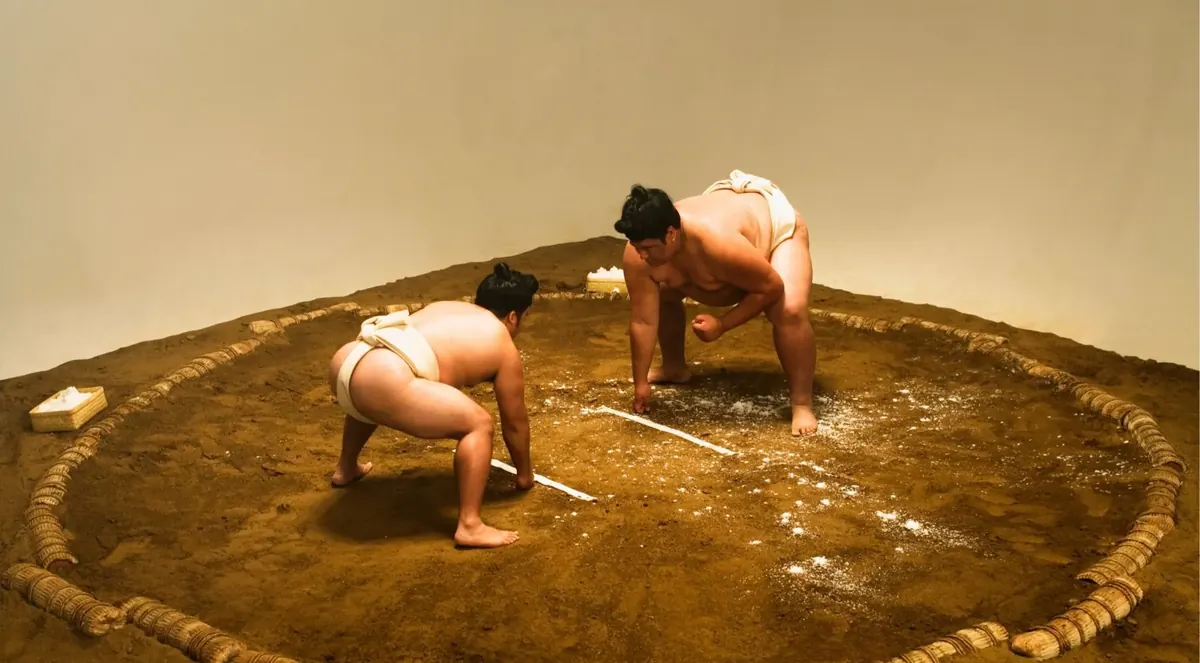
The format is simple. An English-speaking host explains sumo’s rituals and rules, and two wrestlers demonstrate the shiko stomp, the salt throw and the crouch before the charge. Then they wrestle a few short bouts. The host teaches the audience the cheers, children in the audience sometimes get to take on a wrestler, and everyone gets a photo with the wrestlers at the end. Guides are rated 4.9/5 on the listing. Hosts praised by name in recent reviews include Dai, who is mentioned most often, and Theo, Tom and Paula.
How people rate it depends mostly on what they expected. Families and first-time visitors who wanted a light, funny introduction to the sport describe it as a highlight of their trip, and 94% of English-speaking travelers on the listing give it five stars. Many of the lower-rated reviews come from people who expected competitive sumo, or who booked mainly for the chance to wrestle.
We haven’t been to this show ourselves. For this review we went through recent traveler reports, including translated reviews from French, Italian, German and Spanish speakers, and paid particular attention to complaints about how much wrestling there is, the ring-challenge lottery and finding the entrance. We checked those against the listing and against the operator’s own description of the 90 minutes.
There are five things worth knowing before you book:
- It is a show, not a tournament. The listing says so, and the bouts are exhibitions.
- The operator’s own website splits the 90 minutes into about 40 minutes of explanation, 20 minutes of bouts and demonstrations, and 30 minutes for the ring challenge and photos.
- Only six guests per show get into the ring, and they are picked by lottery.
- The operator describes the performers as former wrestlers. Several reviewers note that they don’t necessarily have the heavyweight build people may expect from televised professional sumo.
- The entrance can be hard to find, and late entry may not be accepted.
Most of these points are in the listing’s notes or on the operator’s site, but they are easy to overlook when the headline promises a chance to challenge a sumo wrestler.
If you go in expecting a lively, well-explained introduction to sumo, you are likely to come away happy. If you expect competitive sumo, or you’re booking mainly for the chance to enter the ring, the experience may feel expensive, since the bouts take about 20 minutes and places in the ring are decided by lottery.
Top Tips Before You Book This One
- Treat the ring challenge as a bonus. Participation is limited to six guests per show, drawn at the start, and a few recent reviewers who booked mainly for the challenge weren’t picked. If wrestling yourself is the main reason you’re going, consider the sumo stable experience in Kawasaki, where every guest trains and wrestles with two former professionals. It costs $163 per person for four hours including a chanko-nabe lunch, and it is rated 4.9 from 93 reviews.
- Book a tournament if you want to see competitive sumo. The next Tokyo tournament runs from 10 to 24 January 2027, and tickets go on sale on 5 December 2026. Our tournament tickets page covers guided seats, and the best time to see sumo guide has every date to 2028.
- Look up the entrance before you set off. The address is Sekisaku Building 2F, 2-5-22 Ōkubo, and the only way in is the front door next to Daiso. Map directions have led some travelers away from the venue.
- Arrive when the doors open. Seats are in banks on two sides of the ring, with a few ringside places. One recent reviewer said anyone who wasn’t there at opening ended up in the back rows.
- Make sure everyone in your group is comfortable following fast-paced English. The show is in English only. A few French-speaking travelers said the host spoke too quickly for them, and one parent wished there were an audio guide for children who don’t speak English.
What the show is actually like
The listing gives the length as 75 minutes to 1.5 hours, and show times vary by date. The operator’s website describes three parts: about 40 minutes of rituals, etiquette and background; about 20 minutes of bouts and techniques; and about 30 minutes for the ring challenge, costume fitting and photos. Reviews broadly match that, although a few people estimated that the actual wrestling lasted closer to 10 minutes.
The welcome drink is a bottle of water. Beer, soft drinks and snacks are on sale, and the venue is cashless: the listing names Visa, Mastercard, American Express, JCB, Diners Club and Discover. There is no meal. If you want chanko-nabe as well, our sumo dinner shows guide covers shows that include one and the Ryogoku restaurants that serve it.
Two recent reviews described the audience as almost entirely foreign tourists, and some mention being greeted by English-speaking foreign staff. For most people that makes the evening easy to follow. A few said it made the show feel less Japanese than they had hoped.
Part 1: Finding the Venue
The listing says the show takes place on the second floor of the Sekisaku Building in Ōkubo, about 1.5 km north-east of Shinjuku Station, and that the only entrance is the front door next to Daiso. Several reviews say the directions were confusing. One family followed map directions away from the venue and paid ¥1,600 for a taxi to get back, and GetYourGuide’s own summary of recent reviews says clearer directions would help.
The show runs to a fixed schedule, and the listing warns that late entry may not be accepted at the front desk. Leave a margin, and use the Daiso as your landmark. The listing also says there are two meeting points depending on the option you choose, so check the address in your confirmation.
Part 2: The Explanation
Many reviews single out this part for praise. The host explains the rules, the rituals, the history and a wrestler’s daily life, and gets the room joining in with the cheers used at real tournaments. Hosts are frequently singled out by name, and the guide category on the listing scores 4.9/5.
It also takes up the largest share of the time. Reviewers who wanted more wrestling found this section long, and several described the tone as closer to a comedy show than a cultural talk. If you like your history served straight, expect a lot of jokes along with it.
Part 3: The Bouts
The listing promises “intense live sparring matches”. On the operator’s own schedule the matches and technique demonstrations take about 20 minutes, and some recent reviews describe seeing between one and three short bouts in that time.
The two wrestlers get warm reviews for their energy and good humor. Recent reviews name George, Ide, Hiro and Koji. The bouts themselves are exhibitions, and a number of travelers described them as choreographed, closer to pro wrestling than to a tournament. Some also said the performers looked different from the professional wrestlers in the listing’s photos, which show a tournament-style setting.
The notes on the listing begin with “This is not a real tournament”. Even so, the short bouts are behind many of the lower-rated reviews. If you want to see how hard real sumo is, one of the morning practice visits or a tournament will show you far more.
Part 4: The Ring Challenge and Photos
After the bouts, volunteers can put on a sumo costume and take on a wrestler. The listing now says the challenge is limited to six guests per show, chosen by lottery, and the operator’s site describes the draw as an omikuji, a fortune slip. Earlier versions of the listing didn’t mention the lottery, and several lower-rated reviews come from people who booked mainly for the challenge and weren’t picked. In one recent account, 14 volunteers drew for the six places.
Children are sometimes picked, and the wrestlers make a show of losing to them. Several parents describe this as the funniest part of the evening. The session ends with a group photo and individual photos with the wrestlers. One reviewer said the photo session was disorganized and they left without their pictures, so stay near the front of the queue if photos matter to you.
Several reviews also mention that at the end, guests were offered a small reward, such as a soft drink or a snack, for leaving a review. It doesn’t change what happens in the show, but it is worth knowing when you look at the rating.
More Sumo Experiences in Tokyo
If you’d rather watch morning practice at a stable or try sumo yourself over a chanko-nabe lunch, the widget below shows other sumo experiences bookable in and around Tokyo.
Common Issues to Know About
Issues specific to the show format
- Most of the 90 minutes is explanation and audience participation. The bouts take about 20 minutes.
- The bouts are exhibitions, and some travelers found them visibly staged.
- The ring challenge is limited to six guests, drawn by lottery, and the price is the same whether you are picked or not.
- Value for money is the listing’s lowest category score, at 4.8/5. Many of the complaints about price come from people who expected more wrestling.
Other things that vary
- Finding the entrance. Use the Daiso next door as your landmark, because the fixed schedule means latecomers may be turned away.
- Where you sit. Seating appears to be first come, first served.
- Language. Everything is in English, and the host speaks quickly.
- Temperature. One recent reviewer found the air conditioning very cold, so bring a layer in summer.
- Photos. The end-of-show photo session can get crowded.
So — Would We Book It?
Yes, for the right trip. At $51 per person it is a fair price for a well-run, 90-minute introduction to sumo in central Tokyo, especially with children or on a first visit to Japan. We wouldn’t book it as a substitute for a tournament, or if getting into the ring yourself is the main reason you want to go.
Book this tour if you want an easy, funny introduction to sumo in English, you’re traveling with children, or your dates miss all three Tokyo tournaments. The Shinjuku Sumo Show & Experience is also one of the lower-cost sumo shows in Tokyo, partly because it doesn’t include a meal.
Book something else if you want to see competitive sumo, in which case plan around a Grand Sumo Tournament, or if you want a guaranteed turn in the ring. For that, consider the Kawasaki sumo stable experience, which costs about three times as much and takes about four hours.
If you book it, look up the entrance before you set off, arrive when the doors open, and don’t count on being picked for the ring challenge.
Common questions
Is the Shinjuku sumo show real sumo?
It is a demonstration, not a competition. The listing states that it is not a real tournament. Two former wrestlers show the rituals and techniques and wrestle exhibition bouts, and the operator's schedule gives the bouts and demonstrations about 20 of the 90 minutes. For competitive sumo you need one of the six Grand Sumo Tournaments, three of which are held in Tokyo in January, May and September.
Does everyone get to wrestle at the Shinjuku sumo show?
No. The listing says the sumo challenge is limited to six guests per show, chosen by lottery. Everyone gets a photo with the wrestlers at the end. If you want a guaranteed turn in the ring, a hands-on experience where every guest trains and wrestles is a better fit.
How long is the Shinjuku sumo show?
The listing gives 75 minutes to 1.5 hours. The operator describes about 40 minutes of explanation, about 20 minutes of bouts and demonstrations, and about 30 minutes for the ring challenge and photos.
Where is the Shinjuku sumo show?
On the second floor of the Sekisaku Building at 2-5-22 Ōkubo, Shinjuku, just north of Kabukichō. The listing says the only entrance is the front door next to Daiso, and that late entry may not be accepted, so allow extra time to find it. The listing also mentions a second meeting point for some options, so check the address in your confirmation.
How much does the Shinjuku sumo show cost?
On 24 September 2026 it was $51 per person on GetYourGuide, reduced from $63. The price covers the show, a bottle of water and the photos. Other drinks and snacks cost extra, and the venue only accepts cards.
Is the Shinjuku sumo show good for kids?
Yes, as long as they can follow English. Children are sometimes picked for the ring challenge, and several parents describe it as the most fun part of the evening. The show is in English only, and one parent wished there were an audio guide for children who don't speak English.
Does the Shinjuku sumo show run all year?
Yes. It is an indoor, air-conditioned show that runs throughout the year, and we found no seasonal timetable or winter break on the listing or the operator's site. Show times vary by date and appear on the calendar when you choose a day.
How We Put This Together
We haven’t taken this show, and nothing on this page describes a visit of our own. The review is based on recent traveler reports on GetYourGuide, including the lower-rated ones and reviews translated from other languages, together with the listing’s own notes and the operator’s description of the show on its website. We checked the price and rating on 24 September 2026. Both change with demand and the season, so the calendar above is the place to confirm them.
Links to GetYourGuide on this page are affiliate links. If you book through them, we earn a commission at no extra cost to you.
Ready to See Sumo in Japan?
Compare tournament tickets, sumo shows, morning practice, and hands-on lessons — verified operators, real reviews, free cancellation on most experiences.
Explore Sumo Experiences